What are the most dangerous airports to land at?
What are some of the world’s most dangerous airports for landings? Here’s a look at ten of the scariest runways out there.
Who needs thrill rides?
Forget that trip to go ride some roller coaster — make part of the trip the roller coaster!
Even though passenger flight has been a reality for more than 100 years, and commercial aviation, for the distance traveled, is the safest form of transportation on Earth, there are still a few wild and wooly airports out there.
And while some of them are found at the edges of the earth, some of them are a little closer to home — and more popular — than you might think.
The list of the most dangerous airports
The complete list of the world’s ten most extreme airports, according to the History Channel, follows — with our additional commentary and some video links.
Tenzing-Hillary Airport (LUA), aka Lukla Airport, Lukla, Nepal
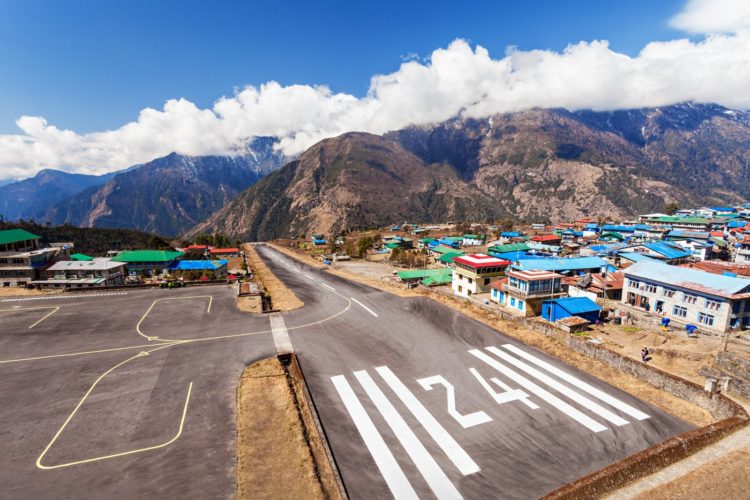
Though seemingly in the middle of nowhere, Lukla is not only the most dangerous airport in the world, but is also a pretty popular one. You see, Lukla is the stepping off point for those headed to climb Mt. Everest.
So what makes it so dangerous? Well, the 9,100-foot elevation combined with the short 1,500-foot runway that has a 12% gradient makes for a bit of a challenge.
Add in the terrain, which makes a successful go-around impossible (meaning you either get the landing right the first time — or you crash), and this lofty airport’s lofty status is well-earned.
Toncontín International Airport (TGU), Tegucigalpa, Honduras
Though tamed somewhat from its former nasty self, Toncontín still presents a formidable approach for even the most skilled pilot. Surrounded by mountains, planes take a corkscrew approach to this short 6,631-foot runway at a healthy 3,297 feet of elevation.
At times on approach, passengers can practically see into houses along the way and the landing gear comes within feet of the surrounding terrain — though a large portion of the hillside pictured in the second video was literally bulldozed away for safety’s sake in 2007.
Gibraltar Airport (GIB) aka North Front Airport, Gibraltar
Gibraltar makes the list for one simple, yet fascinating reason — the only road that connects Gibraltar with the mainland of Spain runs across the runway.
You read that right. Every time a plane lands or departs, traffic stops just like when a train passes through a railroad crossing. And you thought your commute was interesting.
Princess Juliana International Airport (SXM), St Maarten, Netherlands Antilles
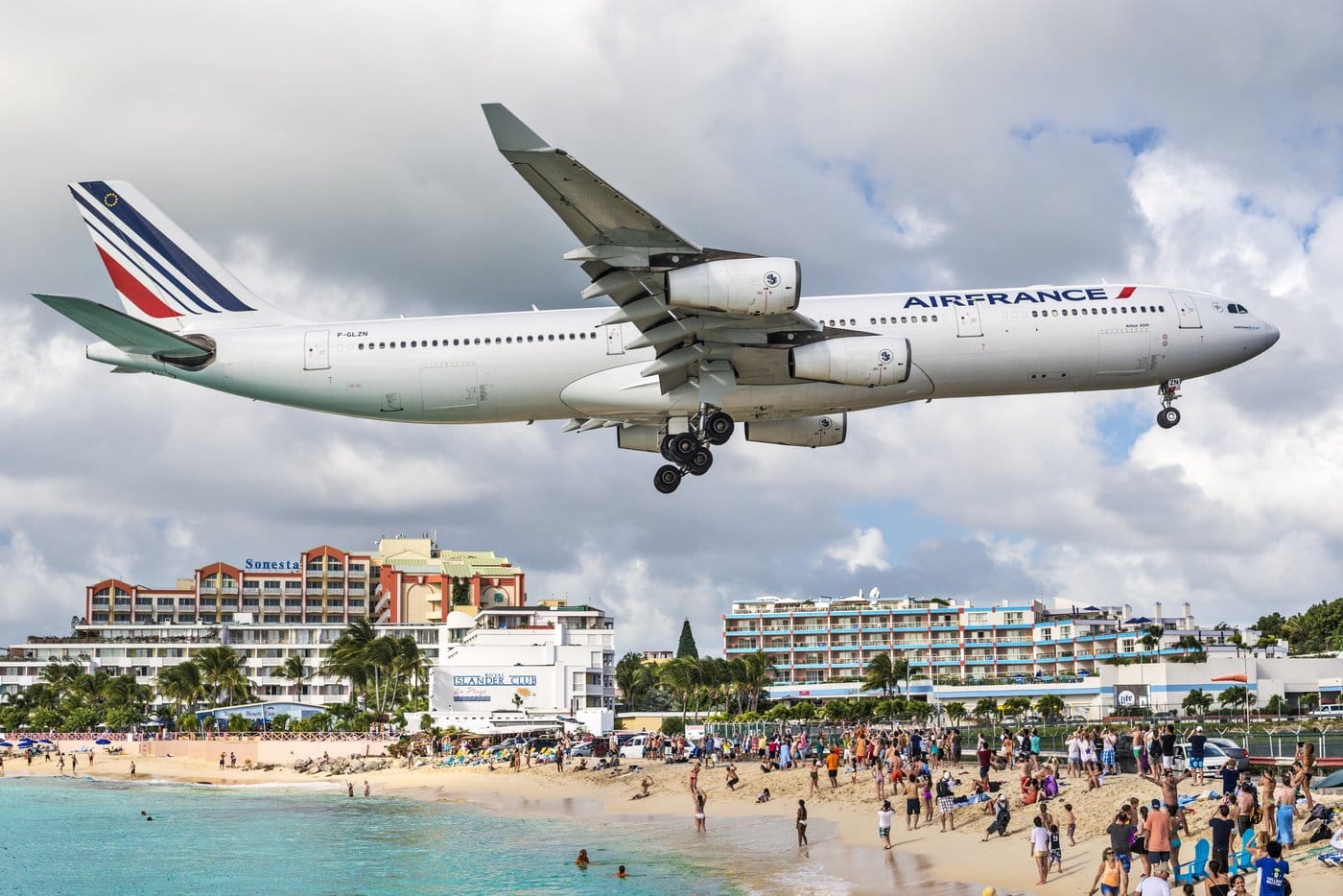
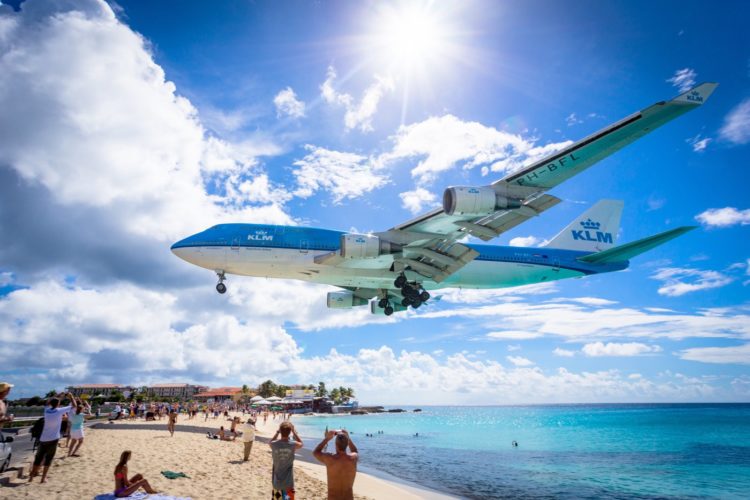
You may not recognize the name, but one glance at any one of the iconic videos or photos of landings at Princess Juliana International on St Maarten will tell you all you need to know about why this airport makes the list. (See the photo at the top of this post and just below for two examples.)
And if you think the landings are scary, the departures are even more hairy — a steep takeoff and a hard turn to avoid the mountains past the other end of the runway.
Gustaf III Airport (SBH), aka St. Jean Airport, Saint Jean, Saint Barthélemy (Saint Barts)
Colloquially known as “Saint Barts,” Gustaf III Airport on the Caribbean island of Saint Barthélemy has quite possibly the most pucker-inducing landings of any modern airport.
The small prop planes that serve the island have to literally dive down to the runway over the hillside that juts above the end of it. Sunbathers are warned not to lie directly under the flight path, and no wonder — you could literally reach out and grab the landing gear as the planes pass over you.
Kai Tak Airport (HKG), Hong Kong
Though it closed in July 1998 and was replaced by Hong Kong International Airport, Kai Tak is still absolutely legendary years after its closure for its risky and dramatic approaches.
Landings on runway 13 were world-famous due to the nearby terrain and completely ridiculous crosswinds, which caused planes to land literally sideways. Even the mighty 747 was not immune to the sketchy approach, as you can see here:
Courchevel Airport (CVF), Courchevel, France
Serving the Courchevel ski area in France, this extreme mountain airport sits at 6,588-foot elevation, sports a runway only 1,722 feet long, and has a gradient of over 18%.
There is no go-around procedure on landing, so pilots have to get it exactly right the first time. There is no possible way that words can do this airport any justice whatsoever — see it for yourself.
Eagle County Regional Airport (EGE), aka Vail/Eagle Airport, Gypsum, Colorado
During Colorado’s ski season, Eagle County Regional becomes the second busiest airport in the state, after Denver International. The combination of rugged surrounding terrain, an altitude of over 6,500 feet, and the winter weather make this airport a beautiful challenge to fly in and out of.
And landings aren’t the only fun part — on takeoff, even the big commercial 757s have to make a hard left to avoid the town of Gypsum and the surrounding hills.
Madeira Airport (FNC), aka Funchal Airport & Santa Catarina Airport, Madeira, Portugal
Sometimes referred to as the “Kai Tak of Europe,” Madeira Airport certainly deserves the moniker. Crazy crosswinds, a singular approach, and the added bonus of being right out over the water make for a hair-raising time on approach and landing.
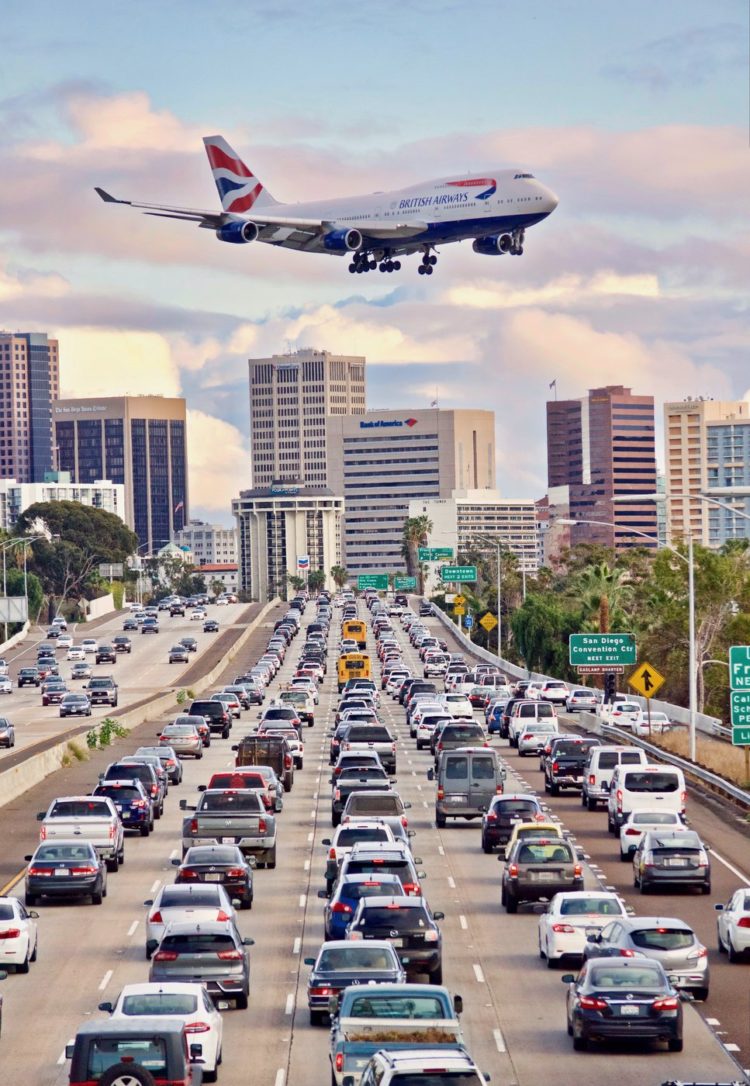
San Diego International Airport (SAN) – aka Lindbergh Field, San Diego, California
Lindbergh Field is the busiest single-runway airport in the entire world, and one of the most interesting approaches in the world, too.
Speaking from experience, it seems as if you can look into people’s living rooms as you come in over Golden Hill and see what they’re watching on TV. While it’s not quite that close, it’s still close enough.
Normally, arrivals come from the east and departures leave to the west, but when visibility drops below 2 miles, both departures and arrivals are done from the west — making for a challenging day for the air traffic controllers, and earning SAN the final spot on the list.
Don’t let this keep you out of the air
Finally, it’s worth noting that, according to a study published in January 2020, it has never been a safer time to fly on commercial airlines.
“The worldwide risk of being killed had been dropping by a factor of two every decade,” says Arnold Barnett, an MIT scholar who has published a new paper summarizing the study’s results. “Not only has that continued in the last decade, the [latest] improvement is closer to a factor of three.
“The pace of improvement has not slackened at all even as flying has gotten ever safer, and further gains become harder to achieve. That is really quite impressive, and is important for people to bear in mind.”