Why do cats have whiskers?
What do cats use their whiskers for? They actually do a lot for your feline friend — far more than we’d ever expect a human hair to deliver. Here’s a closer look.
Not just a pretty face
Yes, your cat’s whiskers make him look adorable. Yes, he’d look funny without them. However, while aesthetically pleasing, whiskers do actually serve a purpose for cats — a very important purpose.
A bit of biology
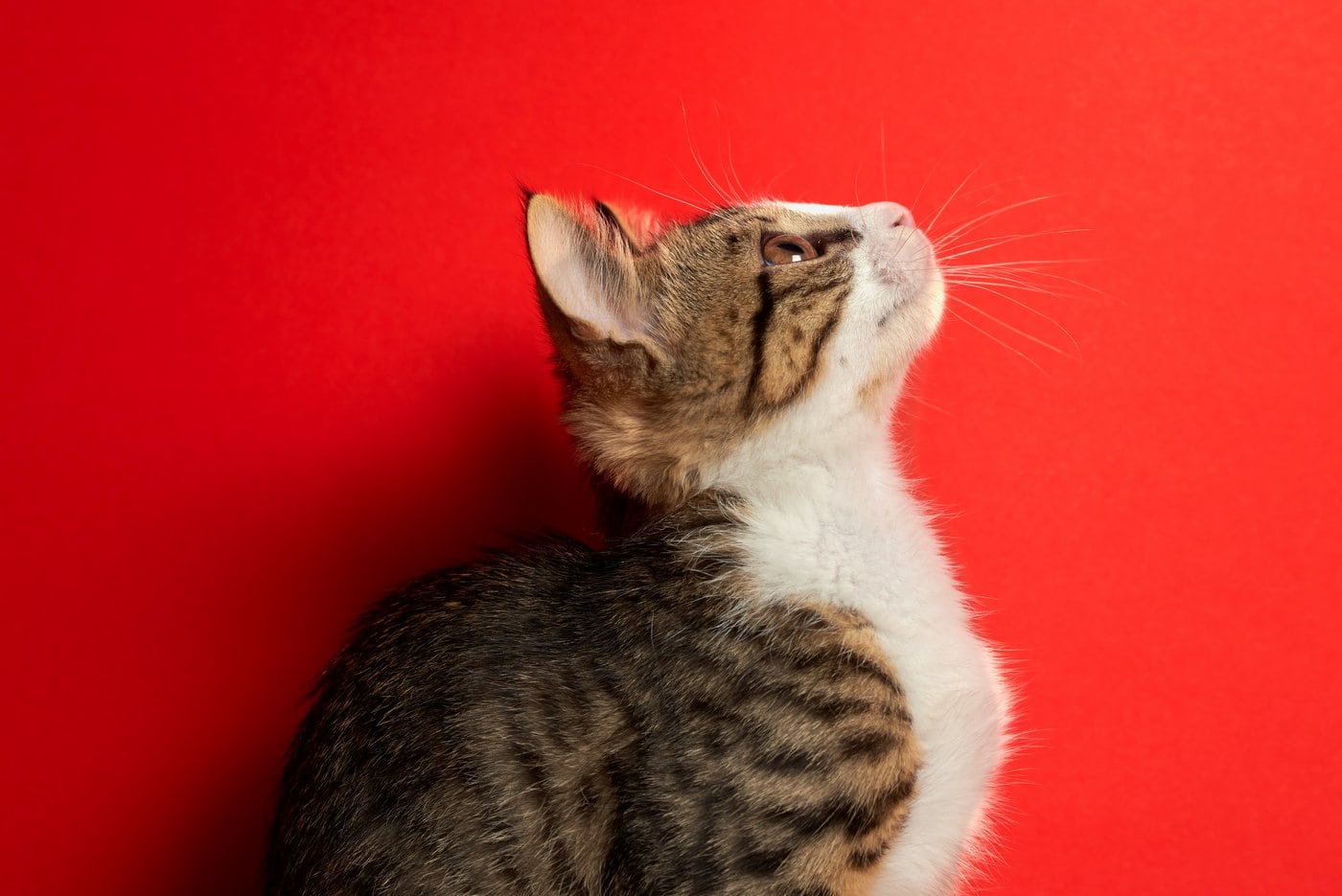
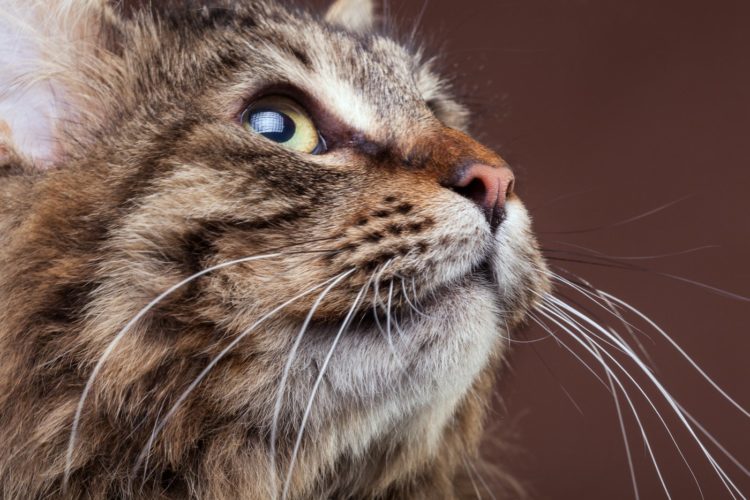
A cat typically has 24 movable vibrissae, or whiskers, arranged in four rows on each side of its nose, on the upper lip. Some cats may have more, but 24 is a common number. They also have a few on each cheek, over the eyes, on the chin, and on the back of the legs.
Whiskers are approximately two to three times thicker than the cat’s hair and are rooted very deep in the cat’s face, in an area that is loaded with nerve endings and blood vessels.
The area of the cat’s brain that receives information from the whiskers is very similar to the part of the brain that receives input from the eyes — the visual cortext. This means that cats can use their whiskers to build up a sort of 3-D image of their surroundings.
So that means…?
Even though cats have exceptional night vision, the whiskers allow them to “feel” their surroundings and build up a picture of objects around them, without ever needing to see them.
The long hairs are also sensitive to air movements, which can indicate either prey or predators moving nearby.
In addition, whiskers aid in hunting — when a cat can’t see its prey because it is too close to its mouth, the whiskers move forward to form a basket-like shape, thus telling the cat exactly where the prey is.
ALSO SEE: How can you create the most cat-friendly home?
They also help a cat determine whether or not they’ll fit into an opening. You may not have noticed that a cat’s whiskers are roughly the same width as its body. That’s so your furry feline friend can stick its face in an opening in an attempt to “measure” it to see if he or she will be able to get through.
What else can they do? Whiskers can offer a great indication of a cat’s mood. When he or she is in a defensive posture, angry, or otherwise not too happy, they will draw the whiskers back. When a cat is in a good mood, they will be more relaxed and pushed forward.
So when your little furry friend has his whiskers flattened back against his cheeks, you might want to think about giving him some space — or have the band-aids ready.
Finally — and as you probably understand by now — don’t trim, cut or pluck your cat’s whiskers. It’s never necessary, and you would be removing or diminishing one of his senses, which could be disorienting, stressful, painful (in the case of plucking) and potentially even get them into a dangerous situation. (Along the same lines, don’t let kids tug or pull on those whiskers, either.)
FIND OUT MORE: Why do zebras have stripes?