
Can eucalyptus trees actually explode?
I’ve heard that eucalyptus trees are a major contributor to wildfires and forest fires because they burn more easily. Is this true that they’re more flammable than lots of other types of trees — and can even explode?
Fuel for debate
The eucalyptus tree, native to Australia, and now common in other parts of the world, is an exotic-looking and aromatic tree.
The state’s first planting of eucalyptus was made by William G. Walker at his Golden Gate Nursery at Fourth and Folsom Streets, San Francisco, in 1856, according to state forestry records. Seeds of 14 varieties were cultivated.
But the reason the trees still now appear throughout the San Francisco Bay Area is that an old land developer, Frank Colton Havens, became convinced that eucalyptus lumber sale profits would be greater than “that of an average gold mine.”
In response to his hunch, between 1910 and 1913, Havens planted at least a million of these trees — although some sources suggest up to eight million.
The early eucalyptus groves were planted largely for firewood, and later, ranchers used them for windbreaks. Then, as the false notion developed that eucalyptus was ideal lumber and a fine substitute for hardwood, everybody started getting into the act, hoping to make a huge profit.
It wasn’t until much later that it was discovered that the California Blue Gums were not harvested for timber even in their native Australia. In fact, varieties used there for lumber were not cut until they were several hundred years old.
So now the hills around the Bay were filled with millions of trees that looked pretty, but were worthless from a business perspective.
But that wasn’t the worst of it.
Exploding eucalyptus trees?
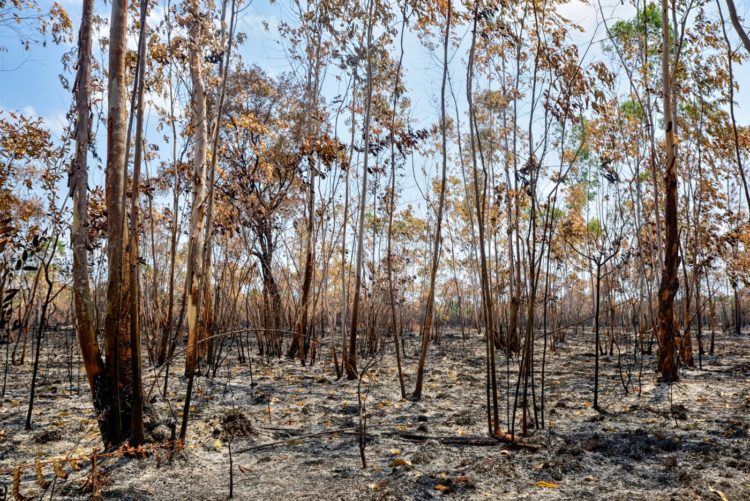
The substance that generates that lovely fragrance is unfortunately also the catalyst for a major fire event, as eucalyptus oil is highly flammable and ignited trees have even been known to explode. That’s why these trees are also often regarded as fire disasters waiting to happen.
Because of this, many in the firefighting industry and government would prefer they were just all cut down and disposed of — particularly in California.
The danger is so critical that for years, UC Berkeley has been working to remove many of these trees from the campus. As they noted in 2004, “The non-native eucalyptus trees are aggressive growers and are particularly dangerous in a fire. Once ablaze, the gummy trees tend to ‘explode,’ spewing out blazing material that can land miles away, sparking new fires.”
The problem is made even worse by the fact that on hot days, the oil will vaporize and rise above the treetops, creating a highly-flammable vapor that will give a fire an easy way to travel across the canopy of branches.
An additional problem is the litter of dead leaves and branches the eucalyptus tends to drop around itself. Due to the high oil and phenolic content of the debris, it cannot be broken down by fungi like many other trees’ litter. (This is partly explained by the fact that eucalyptus oil is known for its antibacterial, antimicrobial, anti-inflammatory and analgesic qualities.)
This leads to an accumulation of very dry, highly combustible fuel on the ground. As such, densely populated eucalyptus groves are susceptible to firestorms of incredible proportions, as presciently pointed out in this study of eucalyptus around the Berkeley-Oakland Hills area, authored 18 years before the catastrophic Oakland fires of 1991.
In fact, it has been pointed out that eucalyptus was responsible for an estimated 70% of all energy released in the 1991 Oakland hills fires.
Don’t panic
Now, before you run out and chop down the tree in your backyard, let me inject a bit of sanity to reduce the paranoia.
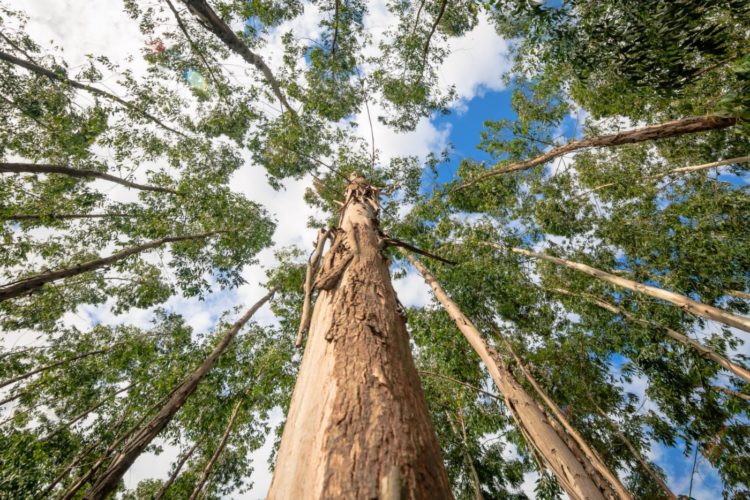
In most cases, the particular species giving all of eucalyptus a bad name for fires is the Blue Gum Eucalyptus. Its cousin, the Red Gum, is much more fire-resistant, and lacks the tendency to explode.
If you do have a eucalyptus tree on your property, there are several things you can do to reduce your fire risk.
For starters, pick up the debris it drops, such as branches and leaves. Dried out, these are explosively flammable. Also, keep your tree trimmed so that it is not in a position to constantly drop dead branches, so it isn’t hanging over your house like the sword of Damocles.
If you live near a large grove of trees that are not under your control, the best thing you can be is aware of the fact that they are there.
If it’s a neighbor, politely suggest the abatement steps listed above, if they don’t already practice them. If it’s public land, contact the local parks department and ask if there’s a clean up program in place to pick up eucalyptus debris.
One other alternative is to find a family of koalas to help out. These cute and furry little Aussies pretty much live on a diet of eucalyptus leaves.