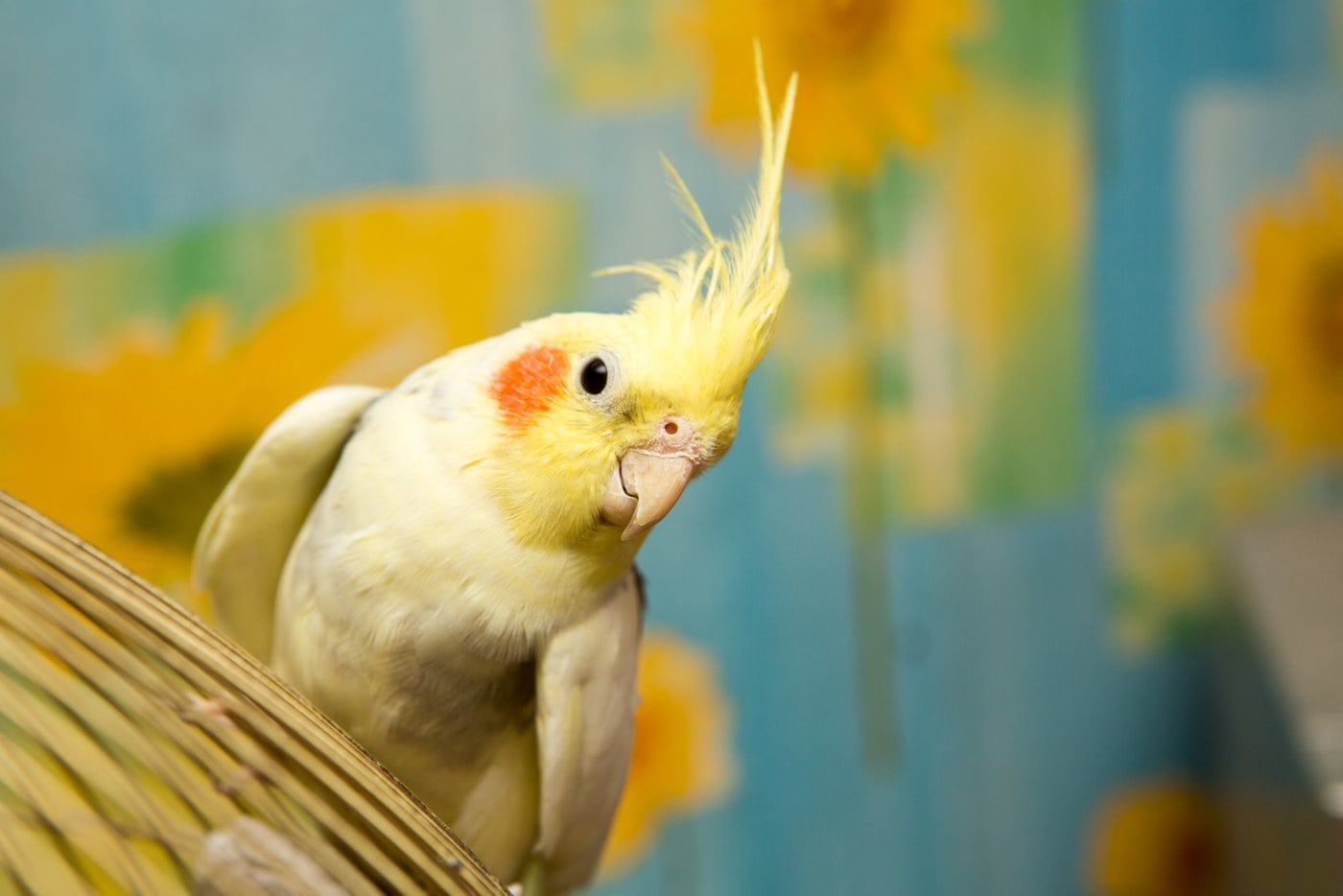
How do you teach a cockatiel to sing and whistle?
There are adorable bird videos all over YouTube, featuring little feathered friends singing, whistling, dancing — and sometimes even carrying on conversations.
Most of these amazing birds don’t have trainers, but patient caregivers. So how can you teach a bird like a cockatiel to sing songs and do things like wolf whistles? Here are some tips.
I know why how to teach the caged bird to sing
Cockatiels (Nymphicus hollandicus) are beautiful, generally sweet-tempered birds that make good family pets. They also make a wide variety of chirps, cheeps, squawks and other bird noises.
Much like their larger parrot cousins, they are also good mimics. They tend to pick up sounds from around their environment and copy them. For example, I sometimes hear our little guy barking like the dogs next door… but they sound muffled, because that’s how he hears them.
The great thing is, in addition to what they absorb naturally, it is possible to teach them things as well.
Boys and girls
First things first: Male birds tend to be the whistlers and talkers. This isn’t to say that a female bird can’t whistle or talk, they just don’t pick it up quite as quickly. So if you have a female, be prepared to spend more time.
Also, as birds age, they can become less vocal. Bird vocalizations, especially in males, are courtship behavior. As they get older, testosterone levels drop, often causing them to be less chatty (try telling this to our 11-year old ‘tiel, however).
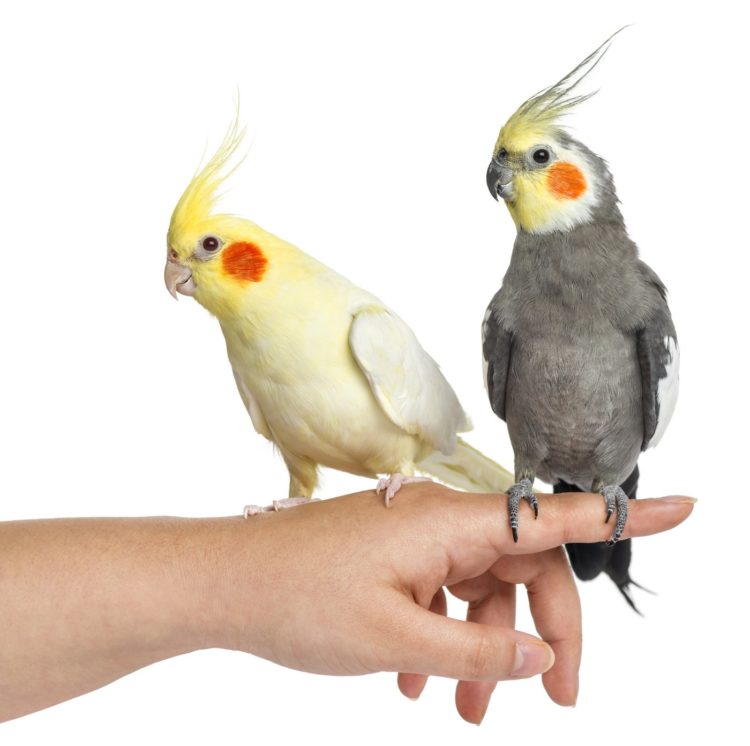
To teach a cockatiel to sing? Pucker up!
There are about as many schools of thought as to the best way to teach your cockatiel to sing as there are things you can teach them to sing.
Some say to remove all food and toys from the cage while you teach them, while others suggest covering the cage.
The one thing that holds true for any method is repetition, repetition, and more repetition. I find what works best is to spend a few minutes at a time, several times a day whistling the tune you want the bird to learn. Get right up close to the cage (or have them on your hand in front of you) and whistle while they watch you.
As for talking, just talk to your bird! When you walk up to the cage, say “hello.” When you head out of the house, say “goodbye” or “see you later” or what have you.
The more they hear the words, the better they will get at saying them, and by using them in context (as in, not just saying “bye” at random times) they will actually learn how to use the words correctly — in context.
Don’t get discouraged
Just like humans, birds learn at different rates. If they don’t get it right away, don’t give up! Keep teaching, keep whistling, keep talking to them.
It may take six days, six weeks, or six months, but when you least expect it, you’re going to walk in the door from work and be greeted with a little “hello” from across the room. And that makes it all worth it.
Cockatiel sings “If You’re Happy & You Know It”
Cockatiel sings “Indiana Jones” theme song